Deciding whether do you need a tour guide in Jordan depends on your route, available time, and how much historical context you want when visiting ancient sites. Jordan is a safe country with modern highways, clear road signs in English and Arabic, and welcoming local communities, making independent transit straightforward for many travelers. However, exploring complex archaeological ruins without commentary often means missing crucial architectural details and historical context. At Jordan Tourism, an independent service, we help travelers arrange a licensed private tour guide in Jordan matched to their language, dates, and route, and can also arrange airport pickups, hotel transfers, and car transport with a driver between sites, subject to plan and availability confirmed via WhatsApp or phone.
Short answer: do you need a tour guide in Jordan?
A tour guide is not legally mandatory for traveling in Jordan or for entering major tourist destinations. You can buy entry tickets at gate offices or use the Jordan Pass, walk through security, and explore completely on your own. When evaluating if is a tour guide necessary in Jordan, the decision comes down to personal travel style, safety preferences in natural areas, and how much you want to learn about ancient monuments.
If your primary goal is driving between cities, relaxing at resort hotels, and visiting scenic overlooks, you can easily travel without dedicated assistance. However, if you want to understand Nabataean water management in Petra, Roman city design in Jerash, or early Christian mosaics in Madaba, relying solely on guidebook text can be restrictive. Many visitors choose a flexible arrangement, booking an accompanying guide for primary archaeological stops while handling driving days and beach stays independently. Alternatively, travelers who prefer end-to-end logistics opt for a full private Jordan tour with educational commentary throughout their journey.
Traveling Jordan on your own: what is easy
Jordan is widely recognized as one of the most accessible countries in the Middle East for self-guided trips. Can you travel Jordan without a guide? Yes, because infrastructure along primary tourist routes is established, rental car agencies operate at major airports, and mobile navigation applications work reliably across the country.
If you decide to explore Jordan without tour guide bookings for all or part of your trip, several aspects of the journey are straightforward to manage on your own:
- Highway driving: Renting a vehicle at Queen Alia International Airport and driving south along the Desert Highway (Highway 15) or the scenic King’s Highway (Highway 35) is direct. Driving from Amman to the Dead Sea takes about one hour, while driving from Amman to Petra takes about three hours on the Desert Highway.
- Resort and coastal stays: Visiting the Dead Sea resort zone or the Red Sea coast at Aqaba requires no guided oversight. Hotel check-in procedures, beach access, and floating in the Dead Sea are simple self-service experiences.
- Entry ticketing: Purchasing individual entry passes at gate booths or obtaining a pre-paid tourist pass online prior to travel is simple. Official entry rules, pass conditions, and park details are maintained on the official Visit Jordan website.
- City exploration and dining: Walking through urban areas like Rainbow Street, Webdeih, or downtown souks in Amman is safe and easy. Local shopkeepers and restaurant staff frequently speak functional English.
- Marked nature trails: Walking designated routes inside nature reserves such as Dana or Ajloun during open daytime hours can be completed independently using marked path maps.
While basic navigation between cities is clear, self-guided travelers must spend time reading guidebook materials beforehand to understand the historical context of the monuments they visit.
Where a guide makes the biggest difference
While physical transportation across Jordan is manageable on your own, interpreting thousands of years of human history without explanations can be challenging. When asking should I hire a guide in Jordan, consider destinations where ancient ruins consist of vast stone structures with limited explanatory signage.
An experienced local guide provides clear advantages across several areas:
- Historical interpretation: Complex sites like Petra and Jerash represent multiple overlapping eras, including Hellenistic, Nabataean, Roman, Byzantine, and Islamic periods. A guide explains architectural techniques, trade routes, and religious shifts represented in the masonry.
- Route efficiency: Archaeological sites cover large geographic areas. A guide leads you directly to key structures, hidden tombs, and major viewpoints without losing time on dead-end paths under heavy sunlight.
- Cultural engagement: Interacting with Bedouin communities, understanding local customs, and learning about regional social traditions is easier with a local intermediary.
- Pacing and crowd control: Local guides monitor peak visitation hours when large tour buses arrive, adjusting site routes so you can visit popular monuments like the Treasury or Monastery during quieter windows.
It is helpful to distinguish between transit personnel and educational site guides. Read our comparison on Guide vs driver to understand how these roles differ under local industry standards. Drivers provide vehicle transport between towns, but by law and local rules, only official site guides are authorized to deliver educational historical tours inside archaeological parks. We arrange licensed guides according to Jordanian requirements, and can also arrange airport pickups, hotel transfers, and transport by car with a driver between sites, subject to plan and availability confirmed via WhatsApp or phone.
Site by site: Petra, Jerash, Amman, Madaba, Wadi Rum, Dead Sea
To determine where educational assistance provides the most value, review the specific requirements of Jordan’s main destinations.
Petra
Petra is a vast rock-cut city spanning dozens of square kilometers. Walking from the main visitor center through the narrow sandstone Siq to the Treasury building takes about 30 minutes. Beyond the Treasury, the site opens up into the Street of Facades, the Theatre, the Royal Tombs, the Great Temple, and the long hiking trail to the Monastery (Ad Deir).
Do you need a tour guide in Jordan when visiting Petra? You can legally enter and walk the main trail independently. However, informational signs inside the park are limited. Read our full analysis on Do you need a guide in Petra? to understand site terrain and options. If you want detailed historical commentary, geological explanations of the canyon walls, and guided routes along elevated trails, booking a Private guide for Petra is practical. For park maps, visitor safety updates, and official guidelines, consult the official Petra park page.
Jerash
Jerash is one of the best-preserved Greco-Roman provincial cities in the world. Key structures include the monumental Hadrian’s Arch, the Oval Plaza, the Cardo Maximus colonnaded street, two large stone amphitheaters, and hilltop temples dedicated to Zeus and Artemis.
Without historical explanation, many stone ruins look similar to uninitiated visitors. Hiring a Private guide for Jerash helps you spot structural details, such as Roman chariot wheel ruts worn into stone paving, acoustic engineering in the South Theatre, and early Christian churches constructed over older pagan temples. For location overviews and park operating updates, visit the official Jerash tourism page.
Amman
Jordan’s capital contains layers of historical monuments built into its modern urban landscape. The Citadel (Jabal al-Qal’a) overlooks the city and features structural remains from the Bronze Age, the Iron Age, the Roman Temple of Hercules, a Byzantine Basilica, and the Umayyad Palace complex. Below the Citadel lies the second-century Roman Theatre.
A guide in Amman links these historical periods into a clear story while helping you navigate downtown souks, culinary quarters, and modern cultural neighborhoods efficiently.
Madaba and Mount Nebo
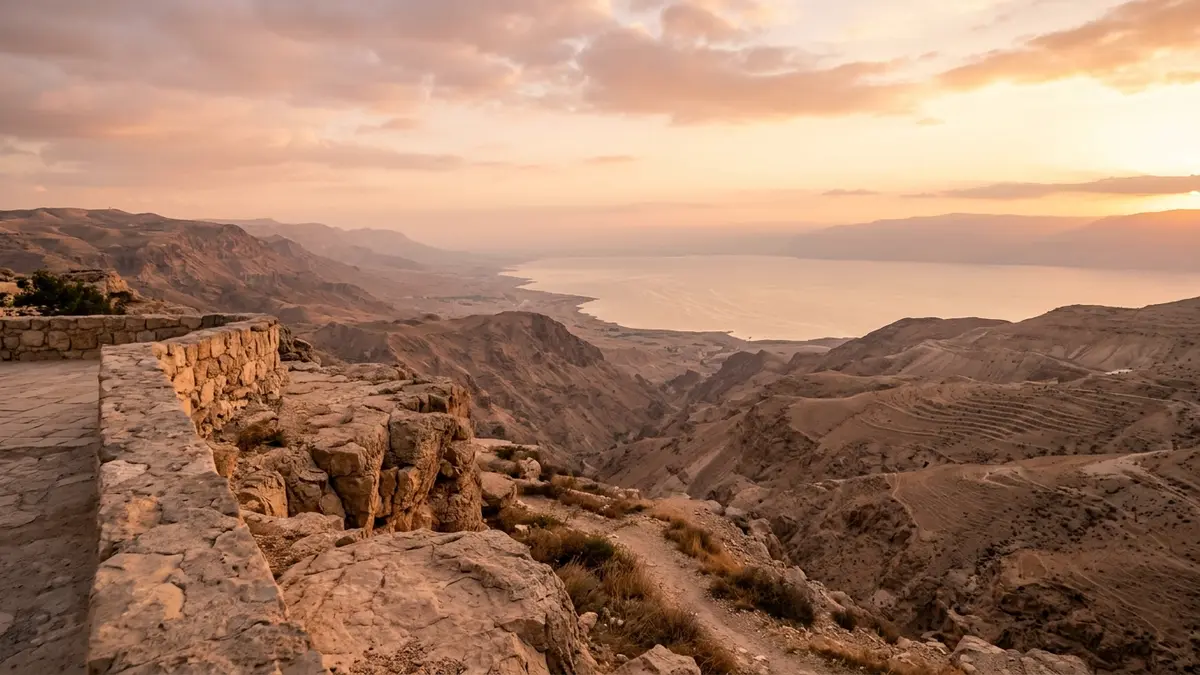
Madaba is known for its Byzantine floor mosaics, most notably the sixth-century mosaic map of the Holy Land inside St. George’s Church. Nearby Mount Nebo offers views across the Jordan Valley toward the Dead Sea and the West Bank.
A guide explains the biblical and geographical references embedded within ancient mosaic tiles and contextualizes the panoramic view from Mount Nebo within regional history.
Wadi Rum
Wadi Rum is a protected desert region of sandstone mountains, red sand dunes, narrow slot canyons, and prehistoric rock carvings. Visiting deep desert areas inside the reserve without local direction is not recommended due to navigation risks in soft sand.
In Wadi Rum, local Bedouin drivers operate 4x4 pickup vehicles to transport travelers between key sites like Khazali Canyon, Burrah Canyon, and Um Frouth Rock Bridge. A Bedouin guide shares practical desert lore, details traditional living habits, and explains ancient petroglyphs carved into cliff faces.
Dead Sea
Located at the lowest exposed point on earth, the Dead Sea area focuses on salt floating, mud baths, and mineral spa resorts.
A tour guide is generally unnecessary for a Dead Sea stay unless you are stopping briefly during a broader day tour and want geographical context regarding water level shifts and regional geology.
Travelers who benefit most
Deciding on Jordan travel with or without guide support depends on individual travel preferences, safety priorities, and background knowledge. Specific categories of travelers gain significant advantages from accompanied tours:
- First-time visitors to the region: Travelers unfamiliar with Middle Eastern customs, Arabic language basics, or regional transit norms often feel more confident with local professional oversight.
- Archaeology and history enthusiasts: Visitors who want deep technical explanations of architectural methods, ancient trade networks, and historical dates gain much more from live commentary than static print materials.
- Families with children: Managing children across large physical ruins under sunny conditions can be demanding. Local guides adapt historical explanations into interactive visual stories while keeping walking routes manageable.
- Travelers on short itineraries: If you have only three to five days in Jordan, a guide ensures efficient movement, fast entry access, and direct routing between highlights without wasted time.
- Non-English speakers: Browsing sites with limited translated signs can lessen the experience. Arranging a guide who speaks your primary language (such as French, Spanish, German, Italian, or Russian) ensures thorough comprehension.
A guide for some days only
You do not need to choose between an entirely guided vacation and an entirely self-guided trip. Many visitors opt for a hybrid model: hiring a private guide for complex archaeological sites like Petra, Jerash, and Amman, while managing transit days, resort stays, and beach visits independently.
This approach balances trip budgets while ensuring clear expert explanations where historical context is most valuable. For example, a common hybrid itinerary looks like this:
- Day 1: Independent arrival in Amman, picking up a rental car, and resting at a hotel.
- Day 2: Meeting a private guide for a three-hour walking tour of the Amman Citadel and Roman Theatre, followed by an independent drive to the Dead Sea.
- Day 3: Independent drive along the King’s Highway to Madaba, meeting a local site guide at St. George’s Church, then continuing south to Petra.
- Day 4: Meeting a private guide at the Petra visitor center entrance for a four-hour comprehensive walkthrough of the Siq, Treasury, and Royal Tombs, followed by independent exploration of upper trails.
- Day 5: Independent drive to Wadi Rum for a pre-arranged local Bedouin 4x4 desert excursion and night camp stay.
At Jordan Tourism, we organize private guide bookings tailored to your preferred itinerary. To discuss guide availability for specific days or full routes, send your requested language, dates, group size, starting point, and planned places to our team via WhatsApp or phone.
How to decide
To determine whether independent travel or private guided service aligns with your plans, review the comparison table and decision checklist below.
| Trip Consideration | Independent Travel | Travel with a Private Guide |
|---|---|---|
| Site Navigation | Self-directed using printed maps; risk of missing hidden features. | Direct routing through main gates, key monuments, and viewpoints. |
| Historical Context | Dependent on reading guidebook text and limited physical plaques. | Live historical narrative, tailored answers, and structural explanations. |
| Cultural Connections | Standard interactions with drivers, shop owners, and hotel workers. | Direct insights into local traditions, societal customs, and etiquette. |
| Schedule Control | Total autonomy over daily wake-up times, stop durations, and meals. | Expertly managed scheduling designed to avoid peak site crowds. |
| Logistical Effort | Managing tickets, entry lines, and walking paths on your own. | Smooth movement through park entry gates and clear site walking paths. |
Follow these simple steps to finalize your decision:
- Map your primary historical stops: Count how many complex ancient sites (Petra, Jerash, Amman Citadel, Madaba) are on your itinerary. Higher counts of historical sites favor hiring educational guides.
- Determine your interest level: Decide if you prefer brief visual walk-throughs or thorough historical and architectural analysis.
- Assess your physical pace: Consider whether navigating large open-air sites independently in hot weather will cause unnecessary fatigue.
- Identify language preferences: If members of your group require commentary in languages other than English, booking a language-matched private guide in advance is recommended.
- Request booking confirmation: Contact our team via WhatsApp or telephone with your language requirements, travel dates, group size, starting point, and route details to review available guide options.
FAQ
Is Jordan easy to travel independently?
Yes, Jordan is a safe and accessible country for independent travelers. Highways connecting Amman, the Dead Sea, Petra, and Wadi Rum are well-maintained, and directional road signs use both Arabic and English text. However, exploring major historical monuments without expert commentary can limit your understanding of ancient structures.
Which sites in Jordan need a guide?
No tourist site in Jordan legally requires an accompanying guide for basic entry. However, sprawling archaeological sites like Petra and Jerash benefit significantly from expert educational guides due to limited informational signage. In desert wilderness areas like Wadi Rum, hiring a local Bedouin 4x4 driver is essential for safe desert transport.
Is a guide worth it for a first trip?
For a first trip to Jordan, hiring a private guide at major historical locations adds significant value by bringing ancient ruins to life through clear historical commentary. A guide also helps navigate large site terrain efficiently, explains local cultural etiquette, and ensures you do not miss hidden architectural details.
Can I hire a guide for just one day?
Yes, you can hire a private guide for individual days or specific historical sites rather than your entire vacation. Many travelers prefer hiring a guide for dedicated walking tours in Petra, Jerash, or Amman, while managing transit days and Dead Sea resort stays on their own.
How do I check if a guide is qualified?
When arranging a private guide, you can ask about their educational background, language capabilities, and direct experience with your planned route. You can review official visitor standards, entry regulations, and regional travel guidelines directly on the official Visit Jordan portal.
What is the difference between a driver and a guide in Jordan?
A driver provides vehicle transportation between cities, airport pickups, and highway transit, but is not permitted to accompany tourists inside archaeological parks to give historical lectures. A tour guide accompanies you inside monuments, providing educational context, architectural breakdowns, and historical narrative throughout the site walk.
Do guides assist with local customs and etiquette?
Yes, a local guide offers practical advice on regional dress standards, tipping customs, local dining etiquette, and traditional social norms. Having a local guide helps prevent cultural misunderstandings and fosters positive interactions with local communities throughout your trip.
Need a Private Guide in Jordan?
Send us these details on WhatsApp to check availability and pricing:
- Preferred language
- Travel dates
- Number of travelers
- Planned route
- Hotel or flight arrival